

In the automotive industry, active stabilizer bar systems have emerged as a crucial technology for enhancing vehicle stability and handling. As an established active stabilizer bar supplier, I am often approached with questions regarding how these systems function at a fundamental level, particularly about the communication protocol between their components. In this blog, I aim to shed light on this complex yet fascinating aspect of active stabilizer bar technology.
Understanding the Active Stabilizer Bar System
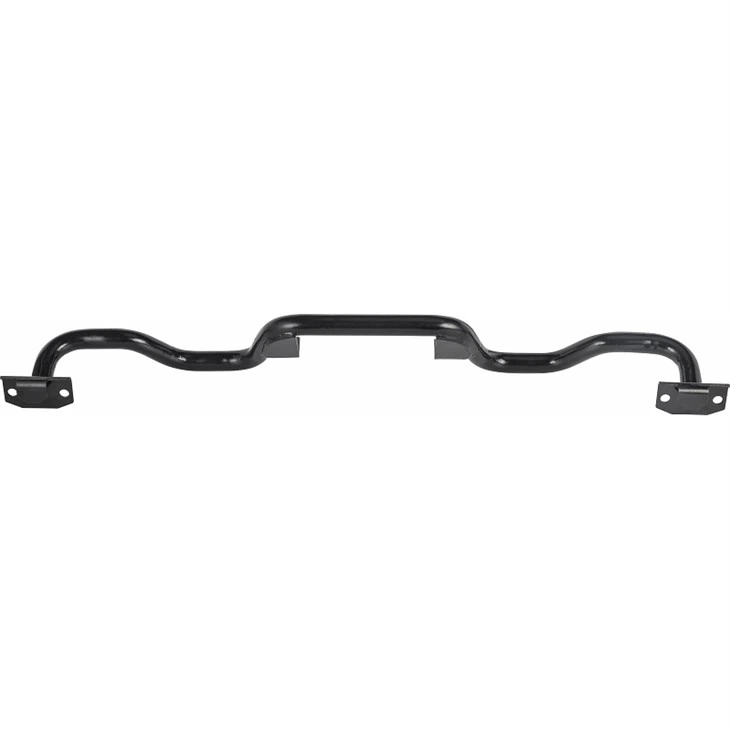
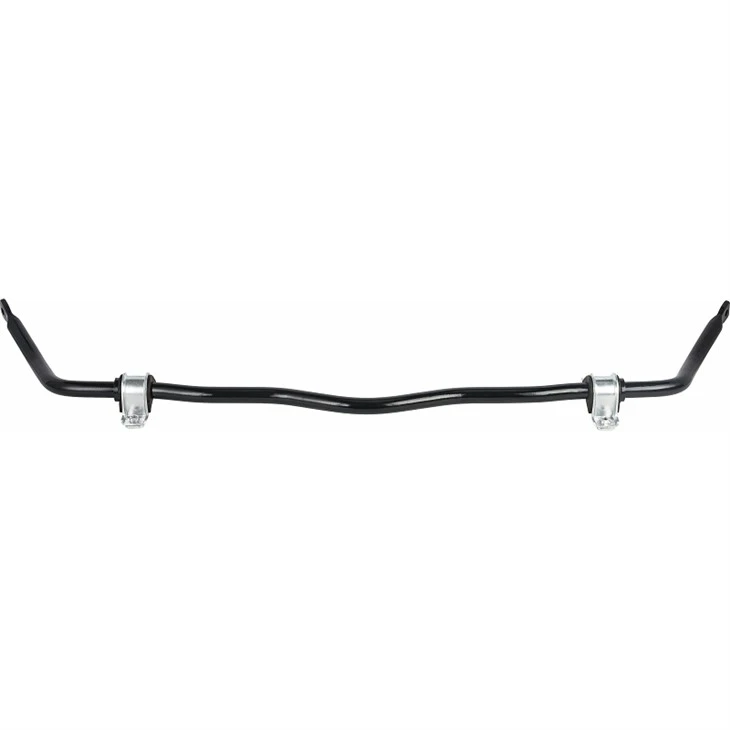
Before delving into the communication protocol, it's essential to understand what an active stabilizer bar system is and why it's important. Active stabilizer bars are designed to counteract the body roll that occurs during cornering, accelerating, or braking. Unlike traditional passive stabilizer bars, which have a fixed stiffness, active stabilizers can adjust their stiffness in real - time based on various driving conditions.
The main components of an active stabilizer bar system typically include the stabilizer bar itself, actuators, sensors, and an electronic control unit (ECU). The sensors continuously monitor parameters such as vehicle speed, steering angle, lateral acceleration, and wheel position. The ECU processes this data and sends commands to the actuators, which then adjust the stiffness of the stabilizer bar accordingly.
The Role of Communication Protocol
The communication protocol between these components is the backbone of the active stabilizer bar system. It ensures that data is accurately transmitted between the sensors, ECU, and actuators in a timely and reliable manner. A well - designed communication protocol is essential for the system to function optimally and provide the desired level of vehicle stability.
Sensor - ECU Communication
The sensors in an active stabilizer bar system are the eyes and ears of the system. They collect data on various vehicle parameters and send it to the ECU for processing. The most common type of communication between sensors and the ECU is through a Controller Area Network (CAN) bus.
CAN is a widely used communication protocol in the automotive industry due to its robustness, reliability, and high data transfer rate. Sensors are connected to the CAN bus, and they transmit their data in the form of messages. Each message has a specific identifier that indicates the type of data being transmitted, such as steering angle or lateral acceleration.
The ECU continuously monitors the CAN bus for these messages. When a message is received, the ECU extracts the data and uses it to calculate the appropriate adjustment for the stabilizer bar. The ECU also checks the integrity of the data by using a cyclic redundancy check (CRC). If the CRC check fails, the ECU may request the sensor to re - transmit the data.
ECU - Actuator Communication
Once the ECU has processed the sensor data and determined the necessary adjustment for the stabilizer bar, it sends commands to the actuators. The communication between the ECU and the actuators is also typically done via the CAN bus or, in some cases, through a more dedicated communication line.
The commands sent by the ECU to the actuators specify the amount of force or torque that needs to be applied to the stabilizer bar. The actuators receive these commands and adjust their operation accordingly. For example, if the vehicle is cornering hard, the ECU may send a command to the actuator to increase the stiffness of the stabilizer bar toreduce body roll.
Actuators usually have their own internal control logic that interprets the commands from the ECU. They may also send feedback messages back to the ECU to confirm that the commands have been received and executed successfully. This feedback loop is crucial for ensuring the accuracy and reliability of the system.
The Importance of a Standardized Protocol
In the automotive industry, standardization of communication protocols is of utmost importance. A standardized protocol ensures compatibility between different components and systems, making it easier for vehicle manufacturers to integrate active stabilizer bar systems into their vehicles.
The use of the CAN protocol is a prime example of standardization in the automotive industry. Most vehicle manufacturers adopt the CAN standard for in - vehicle communication, which means that sensors, ECUs, and actuators from different suppliers can be easily integrated into a single system.
Moreover, a standardized protocol simplifies the development and testing process. Suppliers can focus on developing high - quality components without having to worry about compatibility issues. This leads to faster innovation and better - performing active stabilizer bar systems.
Real - World Applications and Benefits
The active stabilizer bar system, with its efficient communication protocol, has numerous real - world applications. It significantly improves vehicle safety by reducing the risk of roll - overs during emergency maneuvers. By keeping the vehicle more stable, it also enhances the driving experience, especially on winding roads or during high - speed driving.
For example, if you are driving a Anti Roll Bar Kit For ALFA ROMEO, the active stabilizer bar system ensures that the vehicle remains balanced during sharp turns, providing a more comfortable and safer driving experience. Similarly, in a Front Solid Anti Roll Bar for MERCEDES BENZ VITO, the system helps to maintain stability when the vehicle is carrying heavy loads or accelerating and braking aggressively. And for a Stabilizer Bar for Land Rover Range Rover, the active stabilizer bar can adapt to different terrains, improving off - road handling as well as on - road stability.
Contact Us for Procurement
If you are in the market for high - quality active stabilizer bars or want to learn more about the communication protocols in our systems, we are here to assist you. Our team of experts has extensive experience in designing and manufacturing active stabilizer bar systems that meet the highest industry standards. Whether you are an automaker looking to integrate our products into your vehicles or a distributor interested in stocking our active stabilizer bars, we invite you to contact us for procurement discussions. Our commitment to excellence, innovation, and customer satisfaction ensures that you will receive the best products and services in the industry.
References
- Bosch, Automotive Handbook.
- SAE International, Standards on In - Vehicle Communication Protocols.
- Various technical papers on automotive suspension systems and active stabilizer bars published in automotive engineering journals.


