


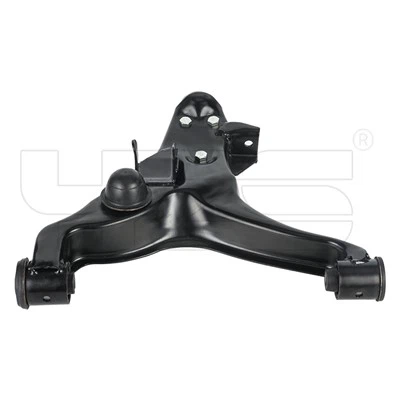
Front Right Control Arm Mazda 2
YZS: Your Professional Front Right Control Arm Supplier
Taizhou Yongzheng Automobile Parts Co., Ltd was established in 1997. It has more than 20 years of experience in manufacturing automobile chassis suspension parts and is one of the drafters of China's anti-roll bar manufacturing standards.
Professional Team
YZS is committed to the R&D and production of anti-roll bars and accessories, key components of chassis suspension. As a modern enterprise, YZS has a complete R&D, production, sales, and service system as well as a strong technical and management team. The company currently has 110 employees, including 75 production line personnel, 15 technical personnel, and 5 sales personnel.
Complete Production Line
We have 4 special pipe bending machines and 4 high-efficiency heat treatment equipment. The complete equipment ensures stable product quality. The entire production process from forging, cutting, forming, heat treatment, fabrication, shot blasting, powder coating and QC inspection is taken care of by us.
Quality Assurance
As an IATF 16949:2016 certified enterprise, YZS has strict management and control from raw materials to finished products, and has obtained many product patent certificates. All products are manufactured from high-quality spring steel to meet high-performance requirements. We conduct regular internal reviews of key processes to ensure we deliver perfect products to our customers.
Quick Response Service
We provide one-to-one customer service, all communications and questions can be responded to within 24 hours, and can help you choose products and answer technical questions. We will also track the order production progress and new product development status and communicate with customers promptly to keep you informed of the latest production status.

Front Right Control Arm Mazda 2
Control arms are suspension components that connect the steering knuckle or spindle to the vehicle's frame or subframe. They are typically made of steel and come in various shapes and sizes depending on the make and model of the vehicle.

Front Left Lower Control Arm Mazda 2
Control arms are essential to the overall health and safety of a vehicle. They help to absorb shock, provide stability, and maintain the proper geometry of the suspension system. Without control arms, the suspension system would not function properly, which can lead to a bumpy and unsafe ride.

Front Right Lower Control Arm Mitsubishi Pajero
Control arms fix steering components to the vehicle and act as a pivot point for the tires. The wishbone style control arm is more stable in lateral movement than single pivot design.

Front Left Lower Control Arm Mitsubishi Pajero
They are engineered to manage steering inputs from the driver and fluctuations from the road surface. This functionality makes them vital to a vehicle's ride, handling, and drivability.
The control arms are one of the core components of a suspension system and serve as the direct connection points between the front wheel assemblies and the vehicle's frame. The control arms allow a driver to steer a car while also guiding the wheels up and down with the road surface. Although they are simplistic in appearance, control arms have a vital role in a vehicle's overall stability and drivability.
The upper control arm connects to the uppermost area of the front wheel and the lower control arm connects to the lower most area of the front wheel, with both arms then attaching to the frame of the car. If you have independent rear suspension, the design is similar.
How Do Control Arms Work?
Each control arm is connected to the vehicle frame with two control arm bushings. These bushings allow the control arms to move up and down.
The opposite end of the control arm is attached to a steel spindle. The spindle is what the front wheel is bolted to. On non-strut equipped vehicles, the spindle is attached to both the upper and lower control arms with a ball joint. The ball joint is a steel ball enclosed in a steel socket that allows the spindle and front wheel to rotate left and right and allow the wheels to move up and down following the roads surface.
Sandwiched between the control arm and vehicle frame, positioned in a spring socket, is a heavy steel coil spring that supports the weight of your vehicle and provides a cushion against bumps.
Stamped Steel Control Arms
Stamped steel control arms are primarily used in cars; however, they are susceptible to rust in damp environments and can easily damage. As they're relatively inexpensive to produce and replace, steel control arms are usually found in cheaper, modern cars.
Cast Iron Control Arms
Cast iron control arms are generally used in modern heavy-duty vehicles, like trucks and SUVs, as this strong material copes better in harsh environments, and is not prone to rust. These types of control arms are usually used in front suspensions. The sturdy nature of cast iron control arms makes them superior for vehicle steering and handling.
Cast Aluminium Control Arms
Cast aluminium control arms are strong and light mechanisms. While aluminium is more resistant to corrosion, it can be more susceptible to wear upon impact due to the softer nature of this metal.
Parts of a Control Arm
Main Frame or Body
This is the largest part of the arm. It extends from the frame where the arm attaches to the vehicle frame to the position where it mounts on the steering knuckle. The frame in today's control arms comes in different shapes. That's because engineers are continually researching different designs for the arm. The most common is the "A" shape.
Ball Joint or Ball Joint Bore
The outer end of a control arm assembly connects to the steering knuckle using a ball joint. Many arms come with the ball joint already installed, others without. The control arm ball joint pivots the steering knuckle, allowing it to turn the wheels while a vehicle is in motion. Control arms that feature an integrated ball joint make installation tasks easy. However, it also means you cannot replace either component as a single piece.
Bushings
Control arms hinge on the frame of a vehicle using bolts and bushings. Control arm bushings prevent metal to metal contact as the arm moves up and down with the wheels. The bushings also absorb vibrations, reducing noise and making rides comfortable, among other functions.
Bolt in
This kind of assembly uses bolts to connect the different parts of the control arm. MacPherson suspensions usually use bolt-in assemblies. Bolt-in control arms allow dismantling of the parts. However, it also means more work.
Unitized
In this control arm assembly, the control arm comes with a ball joint. Because the ball joint and the control arm form one part, you cannot replace only the control arm or ball joint. It requires you to remove the whole assembly.
These types of assemblies are better when it comes to replacing a bad one. You will not have many parts to remove, and the process takes a shorter time. You can also use simple tools for the task.
Press in
These are also integrated with a ball joint. Press-in control arms are commonly used in large vehicles. As the unitized type, press-in assemblies make replacing worn or damaged control arms easy.
Improves Wheel Travel
The vertical distance that a vehicle's wheels can move, wheel travel is especially important for trucks and SUVs that are used for off-roading. An aftermarket control arm increases the wheel travel of the vehicle, keeping it as level as possible when travelling over rough terrain.
Enhances Ride Performance
Upgrading the control arms improves the flex, droop and off-road capabilities of the vehicle. A new performance control arm can handle the different suspension angles that comes with a lifted vehicle.
Strengthens Suspension
Off-roading places stress on suspension components, and a stronger control arm can handle the rigors of the trail. Replacing the stock control arms with an aftermarket control arm designed for lifted vehicles will not only last longer but will help to strengthen the entire suspension system.
Vibrations
The most common failure point of control arms is the bushings. Since these are used to minimize vibrations, worn control arm bushings can induce vibrations in the wheel that can even travel all the way to the steering wheel. Failing ball joints can also cause vibrations. An uncomfortable rive is an early sign of something going wrong with the suspension components.
Vehicle Pulling to One Side
Worn bushings and ball joints upset the alignment of the wheels which can cause the vehicle to steer from left to right involuntarily. This will cause the driver to lose control over the vehicle and can be seriously dangerous when traveling at high speeds.
Clunking Noises
When the bushings wear out, the metal components directly contact each other which gives rise to clunking and knocking noises. These sounds are more prominent as you accelerate and brake. Ball joints show a similar symptom when they fail as the play within the joint increases, the control arm becomes loose and noises increase. These sounds are faint at first but if ignored, the noise intensifies and so does the problem.
Uneven Tire Wear
There are several reasons for uneven tire wear which include bad control arms. Since control arms are integral suspension components, wear and tear of the components causes the wheel alignment to be changed which modifies the wheel contact patch and results in uneven tire wear. The inner or outer tire shoulders may wear more than the other end indicating uneven tire wear. Inspect your vehicle immediately to mitigate the problem and find a solution.
What About Installing & Adjusting Your Control Arms?
When it comes to installing control arms, the first thing you should note is that each vehicle is different as so the degree of difficulty in replacing control arms varies. In most cases, replacing a whole control arm assembly is far easier than replacing a single ball joint or a set of control arm bushings though.
It is always best to enlist the services of a qualified mechanic because, without the right tools, you'll struggle, and even just a seemingly simple bushing replacement will get out of hand very quickly. Things may start well, but before you know it, you can be dealing with a broken vice or some other DIY disaster.
Therefore, replacing the entire control arm assembly is definitely the way to go. While some control arm repairs can be a quick job quickly done in the driveway of your home, in more complicated cases might require more skill or complex tools that most of us won't have lying around at home. If it is your first time replacing something of this nature, having access to a service manual would be extremely helpful.
In the same way, it can take a while to feel confident adjusting your control arms, but if you have the manual for your adjustable control arms handy - as well as some professional help the first few times - you'll get the hang of it. Ultimately, you want to adjust the caster on either side, which will affect the ball joint setting too.
How To Make Control Arms Last Longer?
- Follow the manufacturer's recommended maintenance schedule.
- Avoid driving on rough roads or over potholes whenever possible.
- Avoid excessive braking or acceleration, as these can put extra strain on the control arms.
- Avoid overloading the vehicle, as this can also put extra strain on the control arms.
- Regularly check the control arms for signs of damage or wear, and replace them as needed.

Our Factory
As a modern enterprise, YZS has a complete R&D, production, sales, and service system as well as a strong technical and management team. Our products have a complete range, excellent quality and reasonable prices. Products are widely used in North American, European markets and other markets to meet OEM needs and performance requirements. Our fast delivery and excellent quality have won high trust and appreciation from our customers.


Our Certificates
We have IATF16949:2016 certificate and multiple product patent certificates. We have strict management and control from raw materials to finished products, and the products we manufacture can meet customer requirements. YZS products are widely sold all over the world, and it has established good business relationships with giants in the global automotive market over the years.


Common Problems of Front Right Control Arm
Q: What is a right front control arm?
Q: Can I drive with a bad front control arm?
Q: What happens if front control arms fail?
Q: How much does it cost to fix a right control arm?
Q: What causes control arm damage?
Q: What happens if you don't fix your control arm?
Q: How long do front control arms last?
Q: What happens if control arm breaks while driving?
Q: Can you replace just one control arm?
Q: Is it easy to fix a control arm?
Q: Is a control arm an easy fix?
Q: Is it worth replacing control arms?
Q: What does a bad control arm sound like?
Q: How many control arms does a car have?
Q: How far can you drive on a bad control arm?
Q: How often should front control arms be replaced?
Q: How long does it take to fix control arm?
Q: How do you test a control arm?
Q: Does car need alignment after replacing lower control arm?
Q: Do I need an alignment after replacing upper control arms?
Q: How do I know if I need a new control arm?
Q: Should I replace both upper and lower control arms?
Q: Do control arms affect ride quality?
Q: Are suspension arm and control arm the same?
Q: Where is my control arm located?
Hot Tags: front right control arm mazda 2, China front right control arm mazda 2 manufacturers, suppliers, factory, connected control arm, logistics control arm, ride quality control arm, shipped control arm, procurement control arm, robust control arm
You Might Also Like




Send Inquiry